|
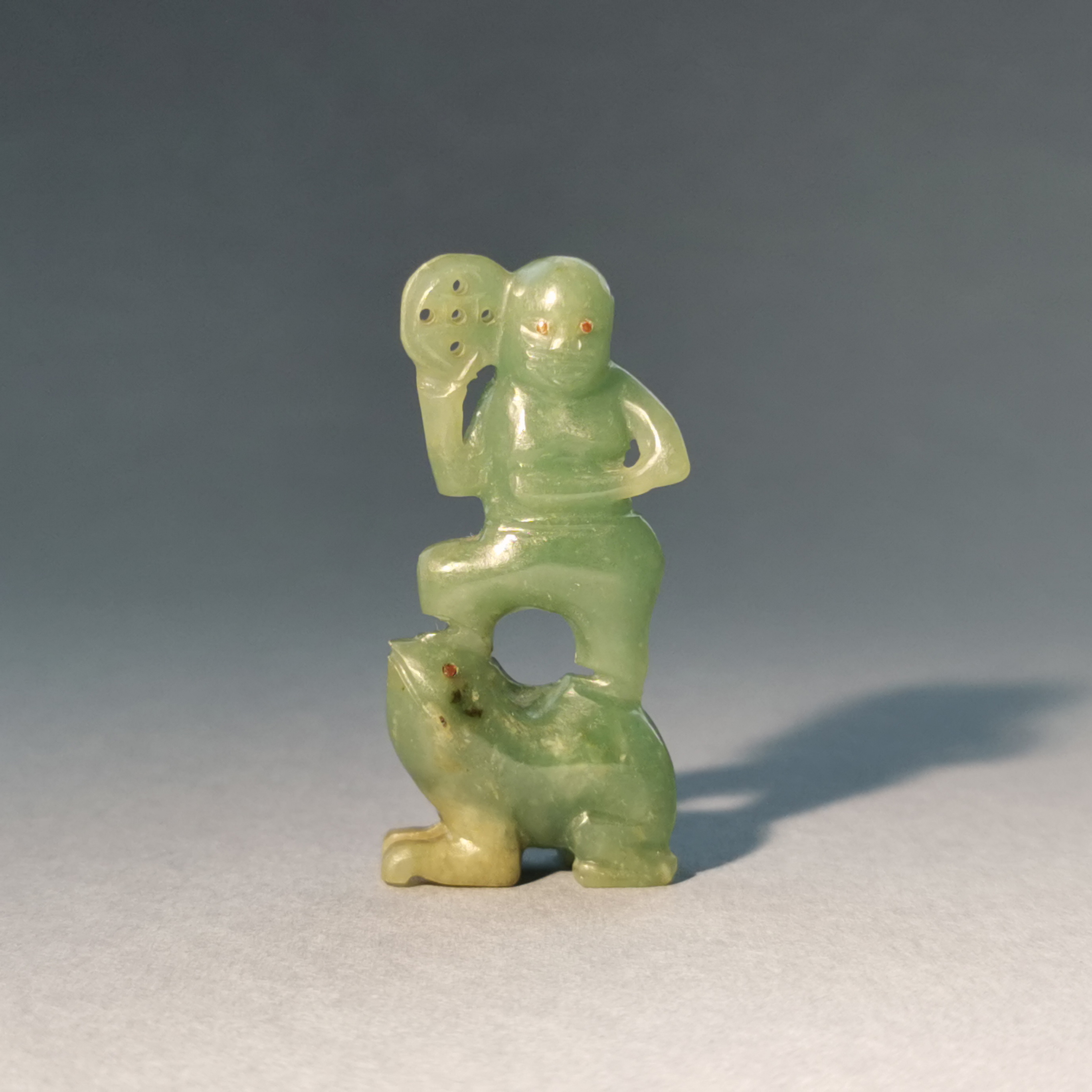
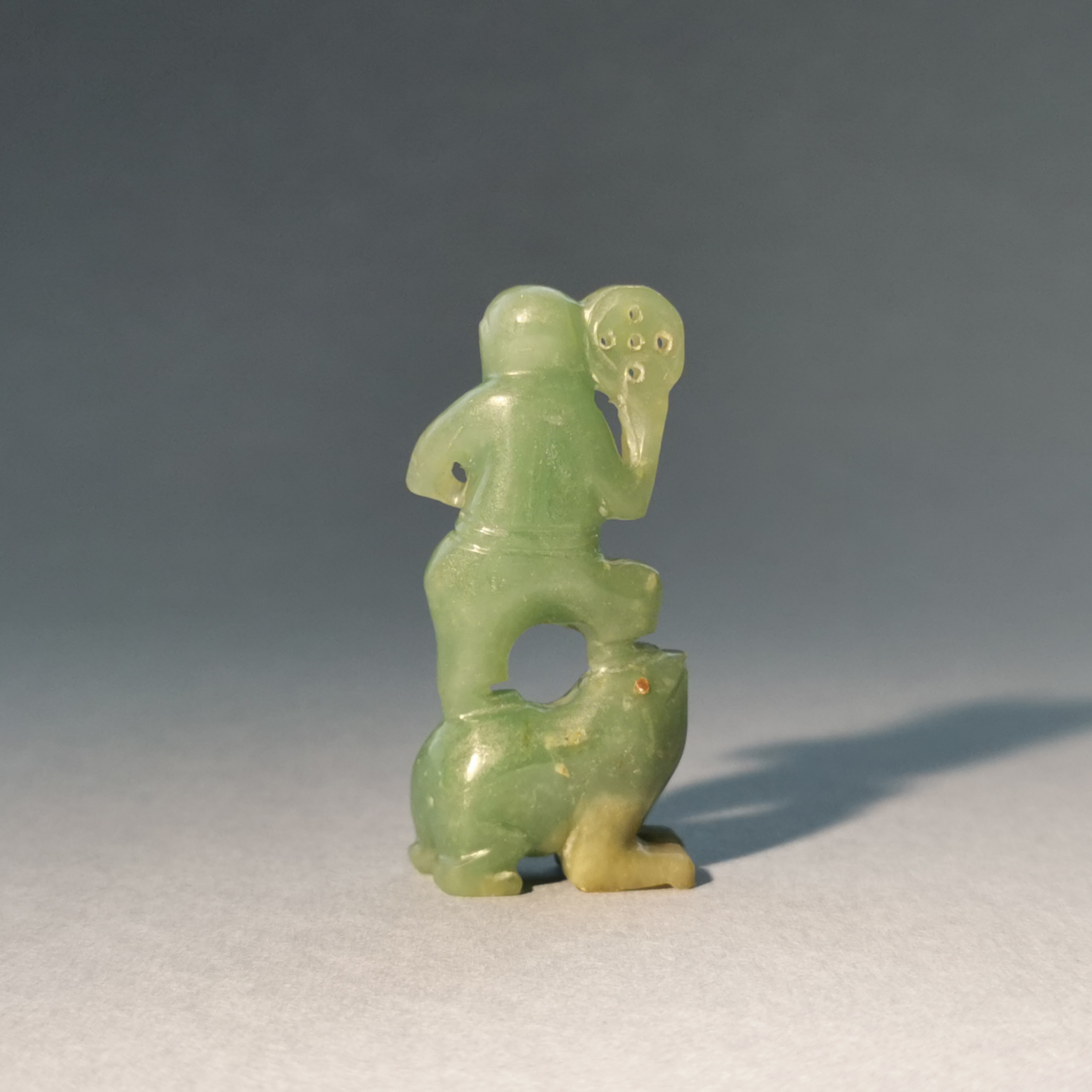
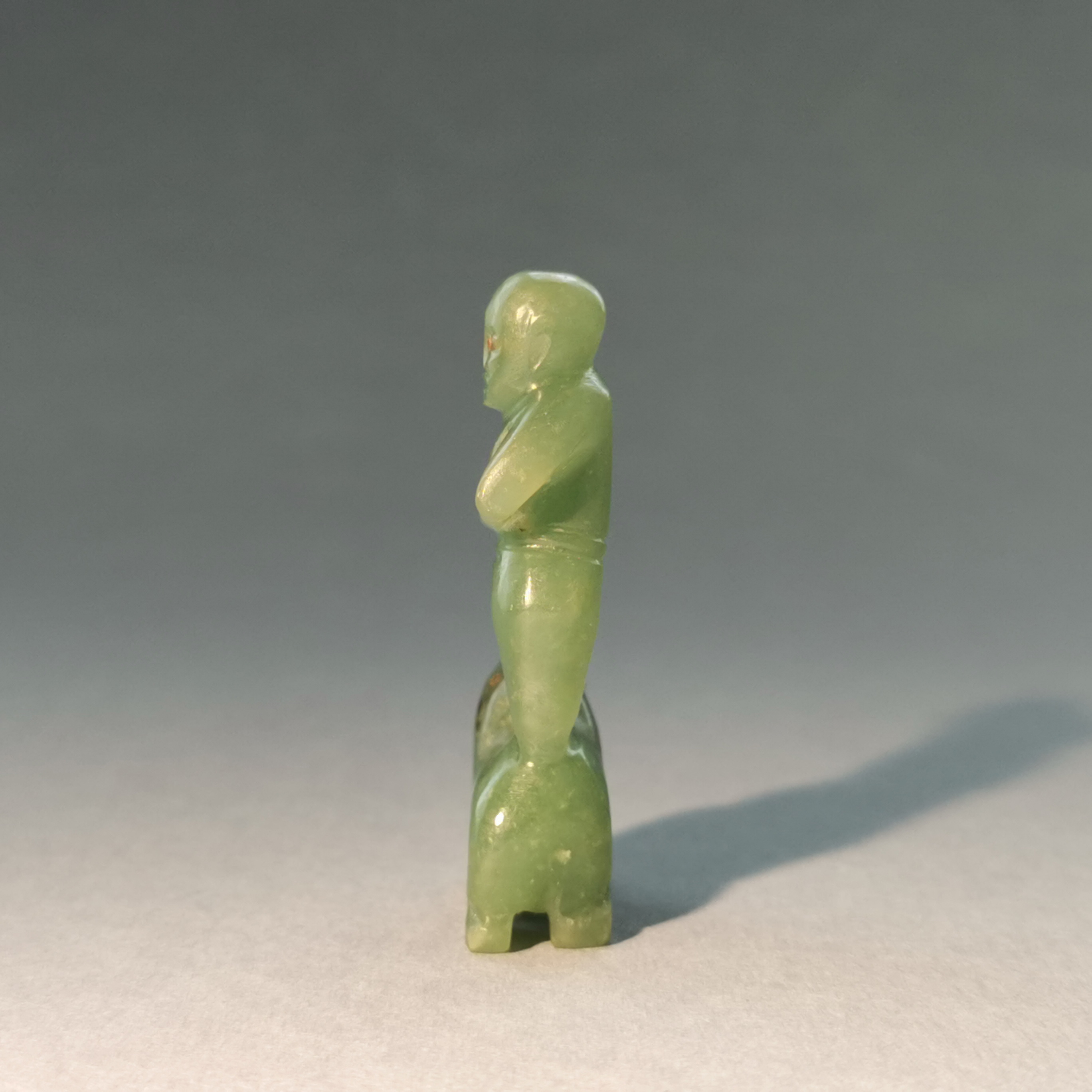
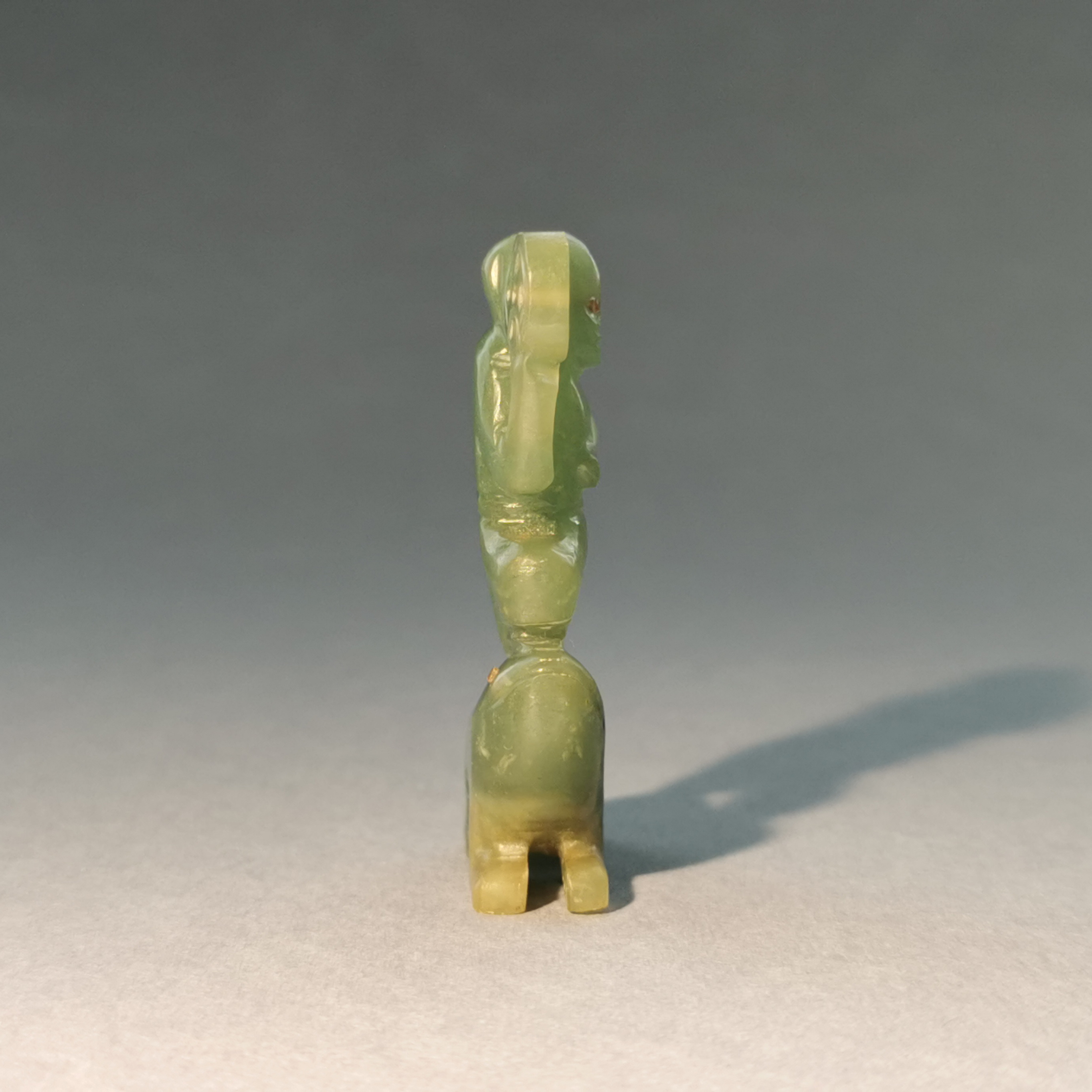
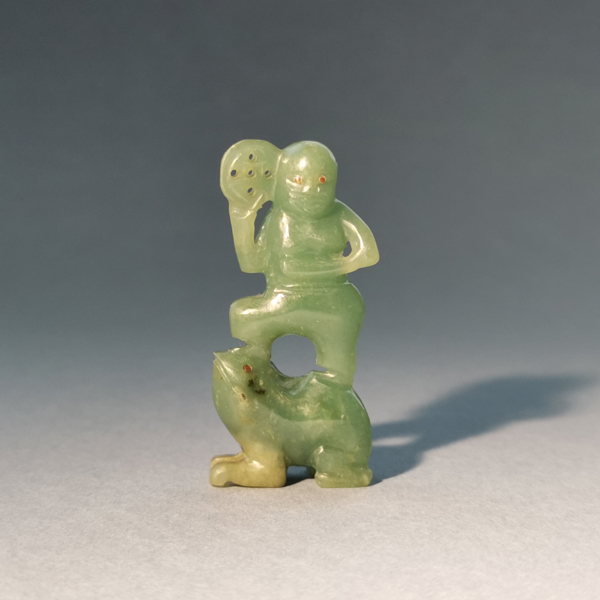
The image of a Chinese Fortune Child standing on a money toad while holding a gold coin is a deeply auspicious symbol in Chinese folk culture and Feng Shui traditions.
This specific imagery blends two prominent symbols of prosperity, happiness, and family lineage: The Fortune Child (运财童子 - Yùncái Tóngzǐ): Usually depicted as a plump, joyful boy or girl, the Fortune Child represents the arrival of unexpected wealth, good luck, and the blessing of a thriving family line. In traditional folk art, these children are often shown carrying giant gold coins, wealth ingots, or lotus flowers. The Three-Legged Money Toad (Jin Chan): This mythical creature is famous for its ability to attract and protect wealth. According to folklore, the toad accompanies deities or immortals (like Liu Haichan) and uses its power to unearth riches and spit out gold coins. It is traditionally shown sitting on piles of gold cash, with an I-Ching coin firmly planted in its mouth.
Condition: Fine. No chips or cracks.
Dimensions: Height: 5.5cm.
Provenance: Ex. Private collection, Hampshire, UK.
£75.00
The Chinese fortune child standing on a toad while holding a coin represents Liu Haichan, a prominent Daoist immortal depicted as a youthful figure who tames the mythical three-legged money toad. This iconographic motif, deeply rooted in Chinese folklore, merges historical Daoist hagiography with popular aspirations for prosperity. Known colloquially as the golden toad or Jin Chan, the amphibian serves as both a celestial companion and an emblematic vehicle for the immortal youth. Art historians and folklorists recognize this pairing as a quintessential visual metaphor for capturing wealth and securing auspicious fortune.
The narrative foundation of this symbol derives from the legend of Liu Hai, a tenth-century court official turned Daoist master. According to popular lore, Liu Hai befriended or subdued a magical three-legged toad that possessed the ability to leap into deep wells and retrieve treasure. By utilizing a string of copper cash coins as a lure, the sage captured and bound the creature. This act of tethering or standing atop the amphibian signifies the domestication of chaotic, wandering forces of nature into a controlled conduit for human benefit.
Iconographically, the visual composition emphasizes specific semiotic elements that communicate abundance. The coin held in the toad's mouth or dangled by the youth functions as a sympathetic magic trigger, symbolically calling forth additional riches. The youth himself is styled as an auspicious boy whose perpetual youth embodies vitality and continuous growth. The toad is frequently marked with constellation patterns, such as the Big Dipper on its back, linking terrestrial wealth acquisition to cosmic alignment.
In contemporary practice and traditional material culture, this imagery persists as a powerful talisman within Feng Shui traditions. Placed within homes or commercial spaces, statues depicting the child atop the coin-bearing toad are oriented to face inward, actively drawing financial prosperity across the threshold. Academically, the artifact illustrates the intersection of religious Daoism and vernacular economics, transforming ancient mythological narratives into tangible objects of desire within commercial spheres.
© Minerva Antiquities 2026 All rights reserved
Powered by w3.css