|
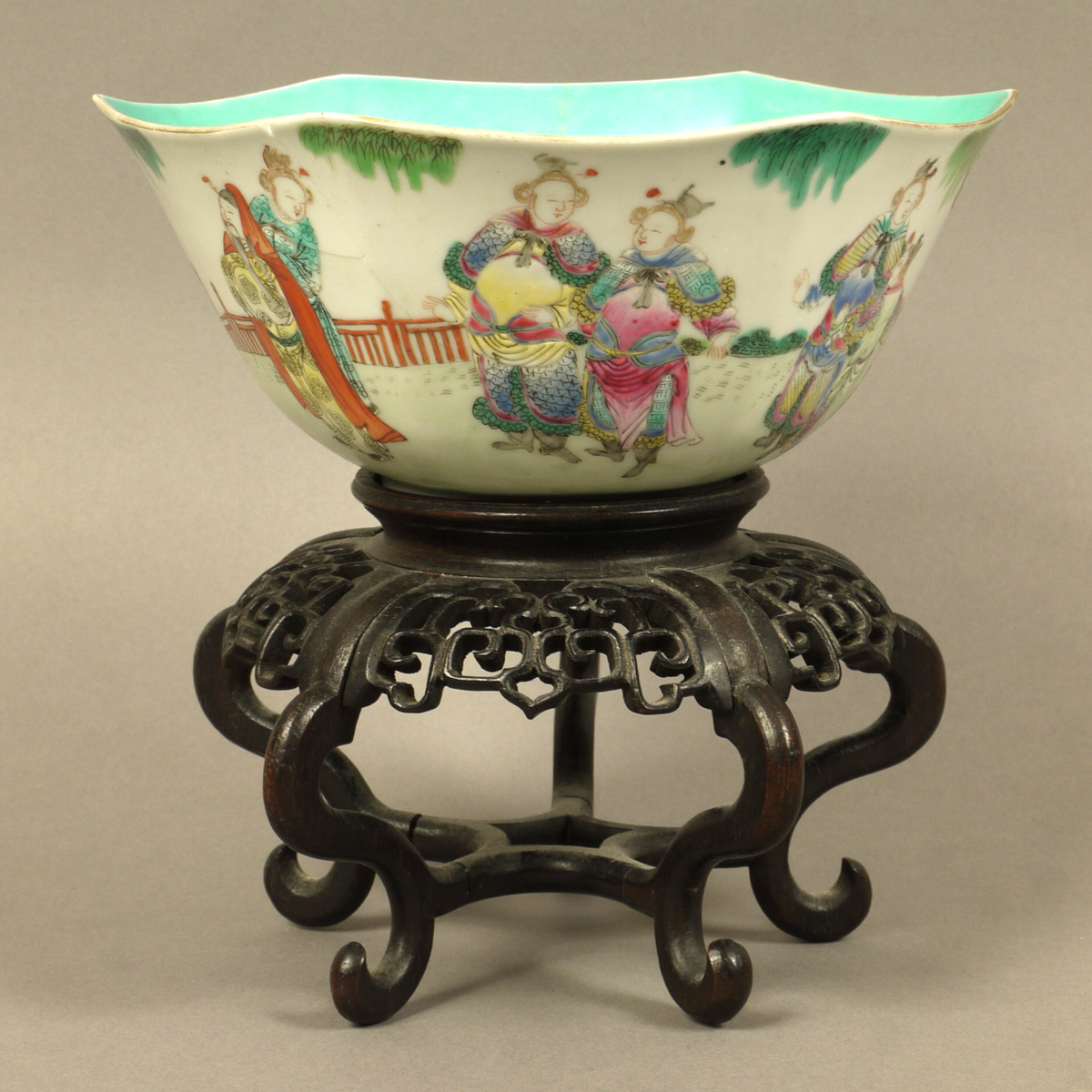
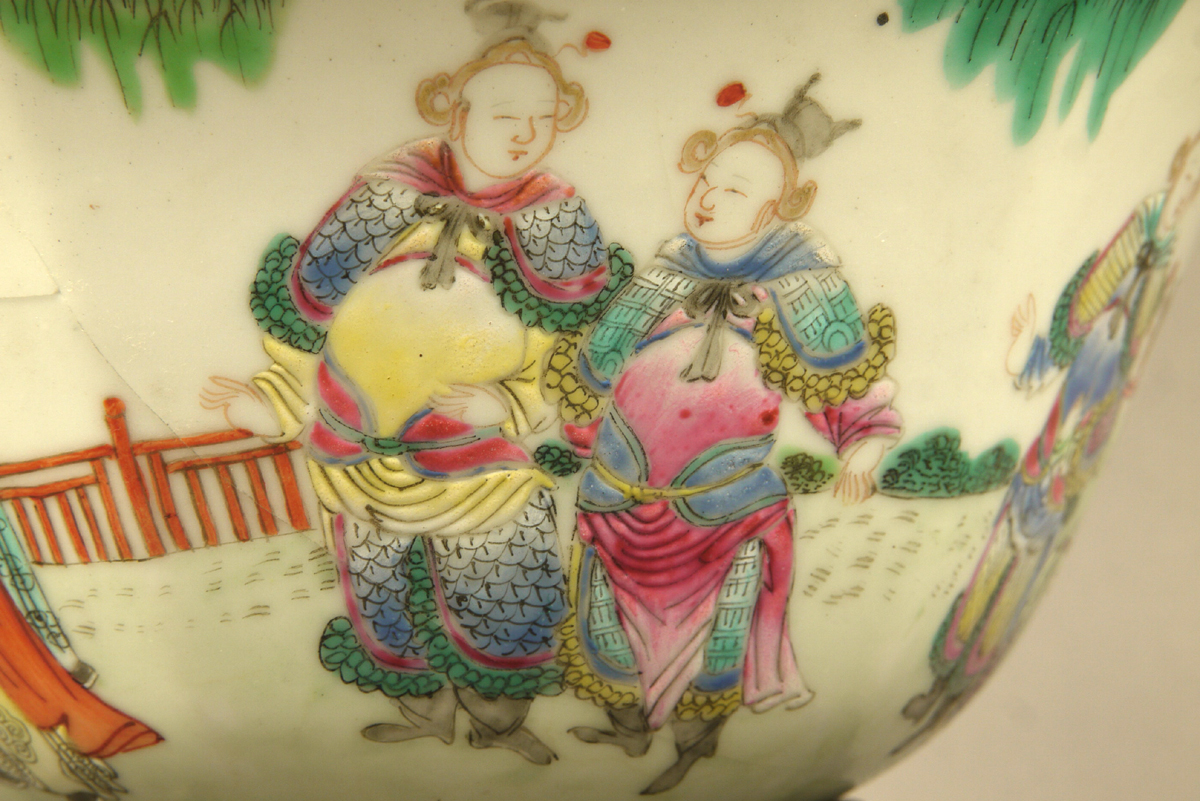
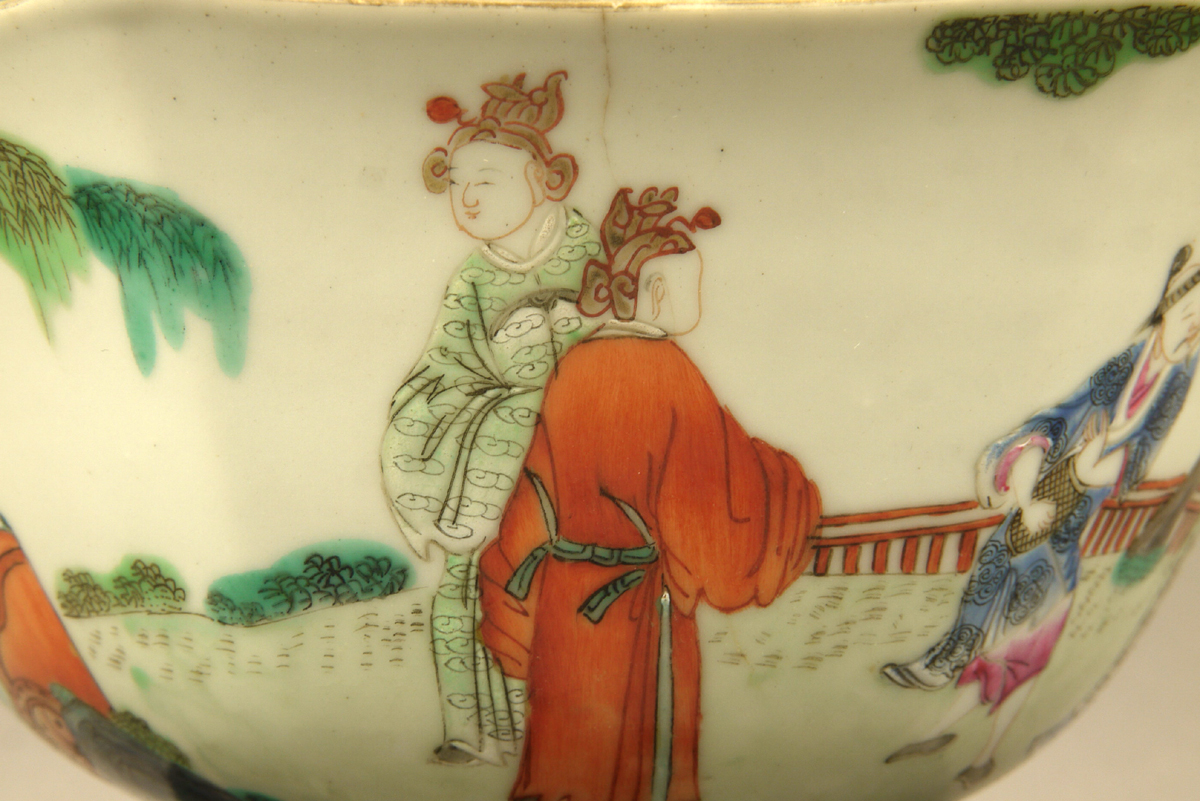
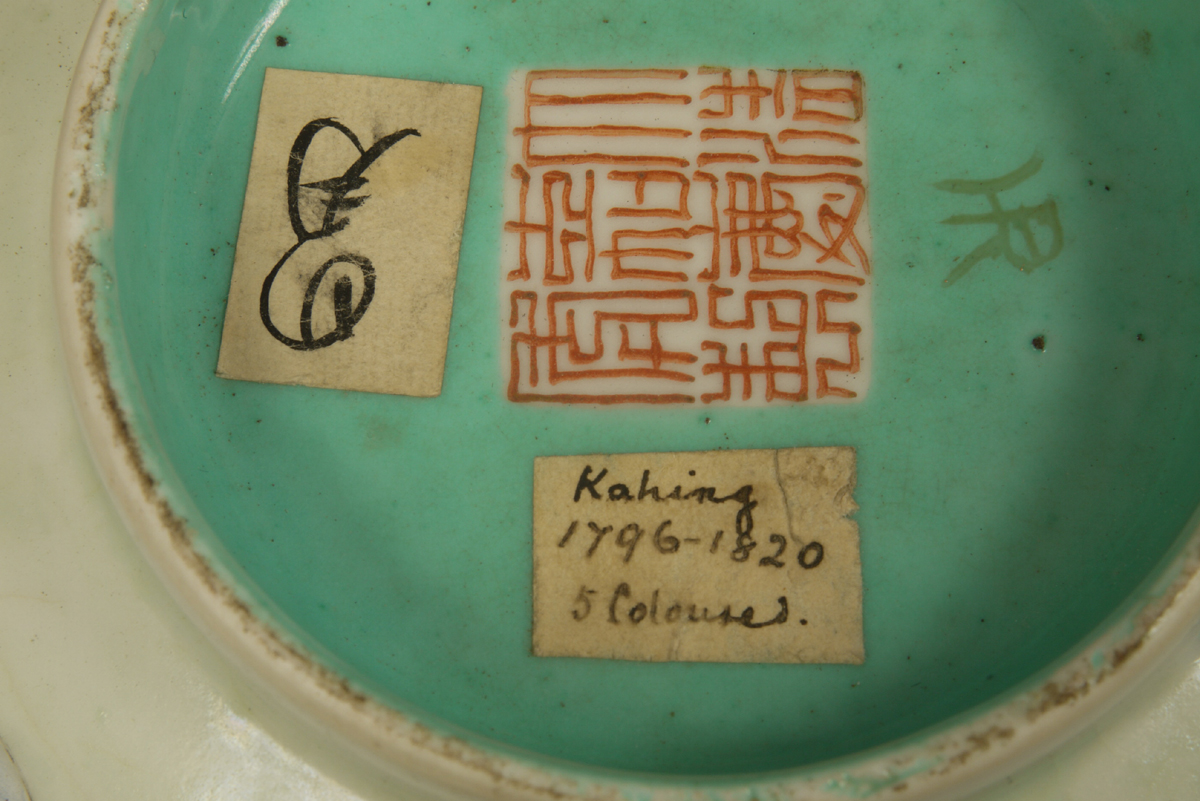
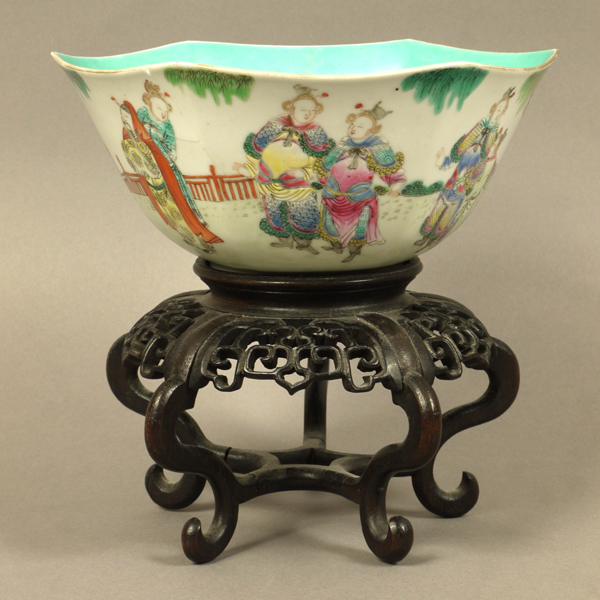
A fine Chinese famille rose bowl of hexagonal outline, polychrome enamelled with a continuous scene of noblemen and women in a garden. The interior and undeside of torquoise glaze, foot rim, iron red seal mark and old paper labels, with original pierced hardwood stand.
Condition: Good. Professionally restored. Small chip to rim (shown).
Dimensions: 16.5cm x 7.0cm.
Provenance: Ex. private collection, UK. Purchased at UK auction.
£300.00
Jiaqing porcelain was produced during the reign of the Jiaqing Emperor (1796-1820) of the Qing dynasty. This period marks a pivotal transition in Chinese ceramic history, moving away from the extravagant, innovative heights of the preceding Qianlong era toward a more conservative and cautious artistic approach. Because the Jiaqing Emperor spent the first three years of his reign (1796-1799) in the shadow of his retired but still-powerful father, the Qianlong Emperor, early Jiaqing porcelain is virtually indistinguishable from late Qianlong wares, directly carrying over its decorative styles, techniques, and forms.
A major shift occurred after 1799 following the death of the elder emperor. Confronted with vast systemic corruption, domestic rebellions, and a heavily depleted imperial treasury, the Jiaqing Emperor enacted policies emphasizing Confucian thrift and anti-corruption. Consequently, production budgets at the Jingdezhen imperial kilns were sharply tightened. Rather than funding experimental glaze formulas or complex new shapes, imperial potters focused heavily on pattern-book repetitions of traditional designs. While craftsmanship initially remained high, the overall output became a quieter, more subdued continuation of 18th-century aesthetics.
Technically, the repertoire relied heavily on established color palettes like fencai (famille rose) enamels-frequently executed over colored or turquoise grounds-and underglaze blue-and-white wares. Molded porcelain also reached a notable peak during this era, showcasing popular motifs such as the "nine Buddhist lions playing with brocaded balls". However, by the final years of the reign, the empire's economic decline became visibly mirrored in the ceramics. The porcelain paste became rougher, the white glazes frequently exhibited small creases or minor imperfections, and the precise refinement of the enamels began to decline.
Authentic pieces from this period are usually identified by their imperial reign marks, which transitioned to a standard six-character format written in zhuanshu (seal script) using underglaze blue or iron-red enamel. Smaller decorative items, such as snuff bottles or delicate wine cups, often featured a condensed four-character variant (Jiaqing Nian Zhi) arranged in a single horizontal line. Concurrently, as domestic imperial demand adjusted to tightening budgets, workshops increasingly expanded their production of commercial export porcelain tailored directly to Western markets, setting the stage for the global trade dynamics of the mid-19th century.
© Minerva Antiquities 2026 All rights reserved
Powered by w3.css