|
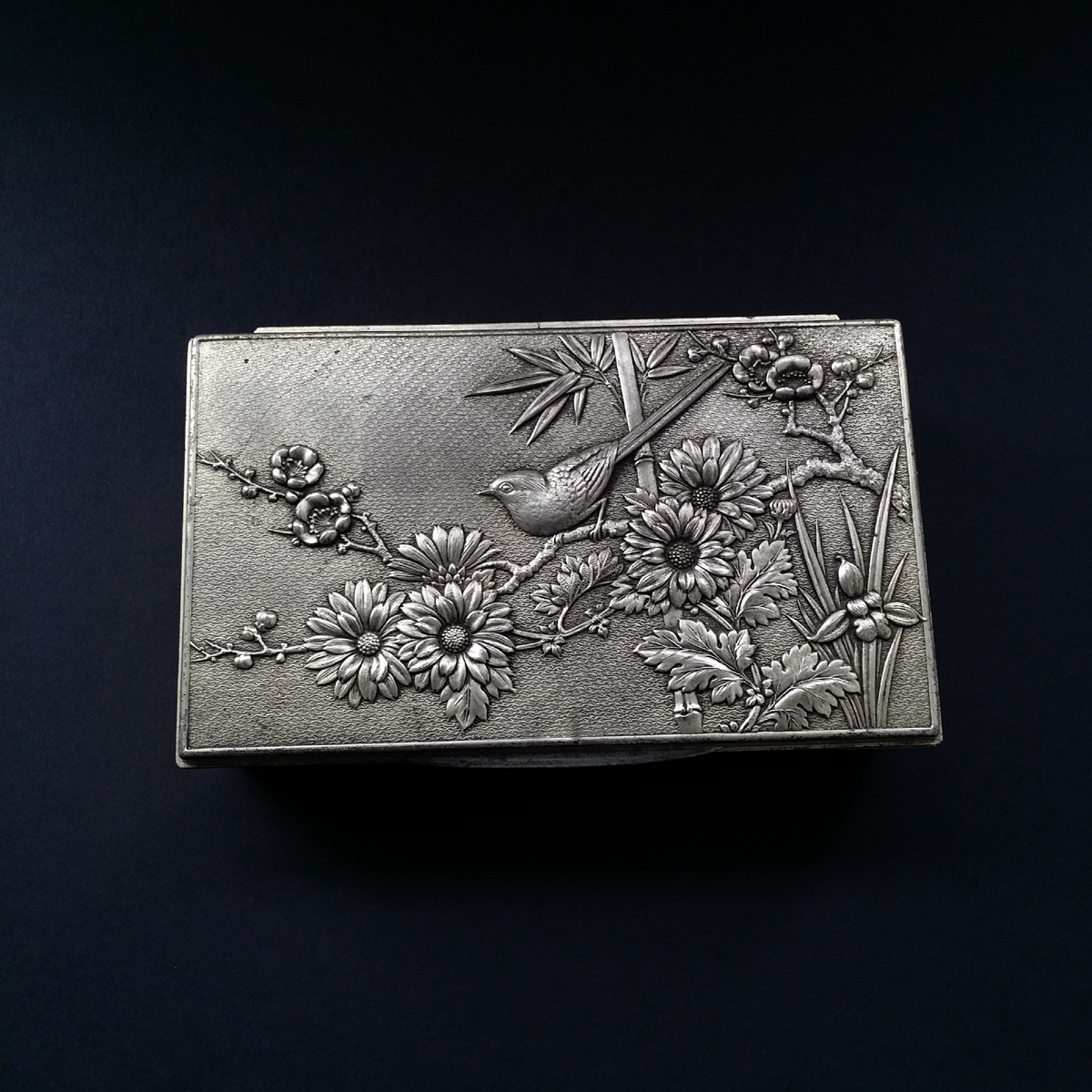
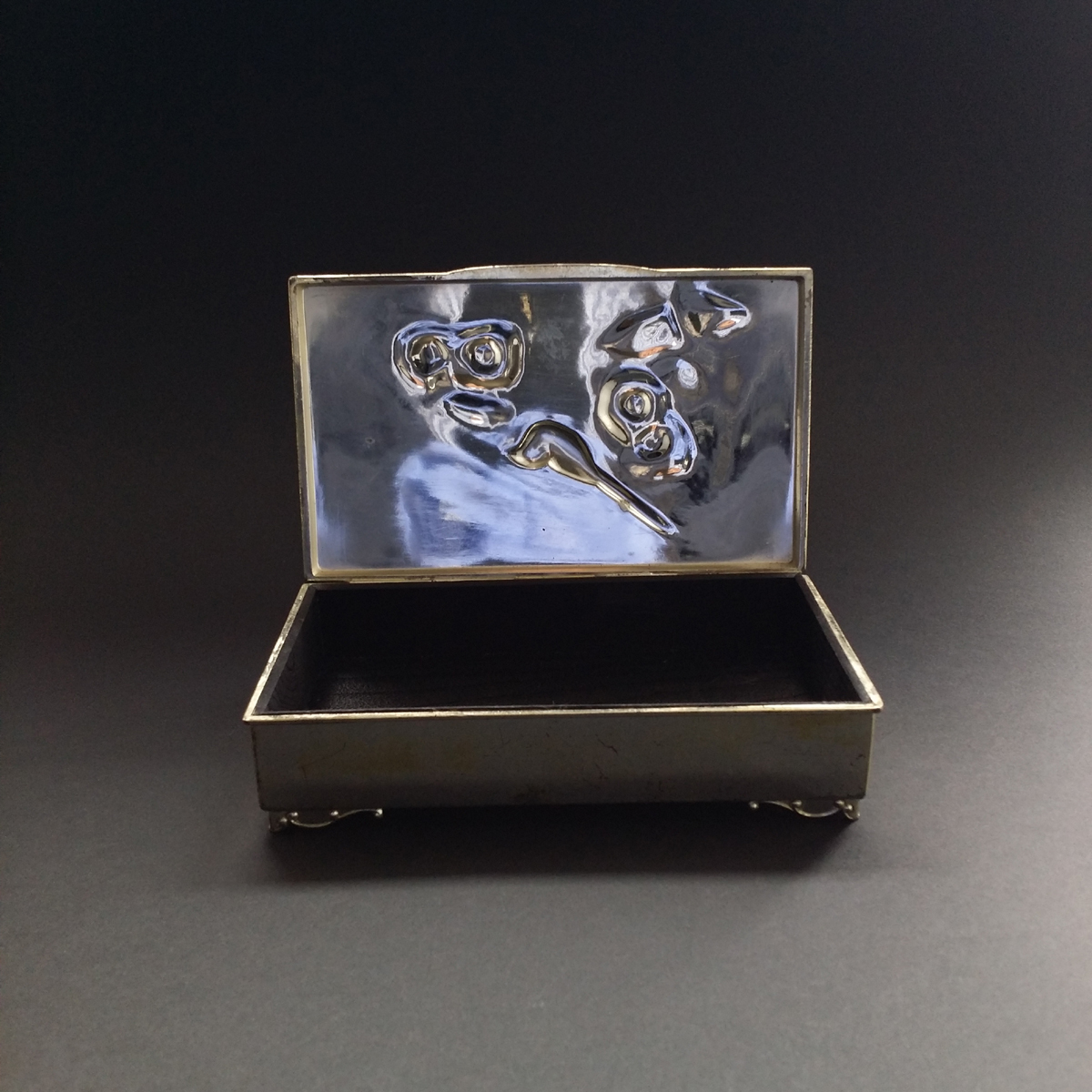
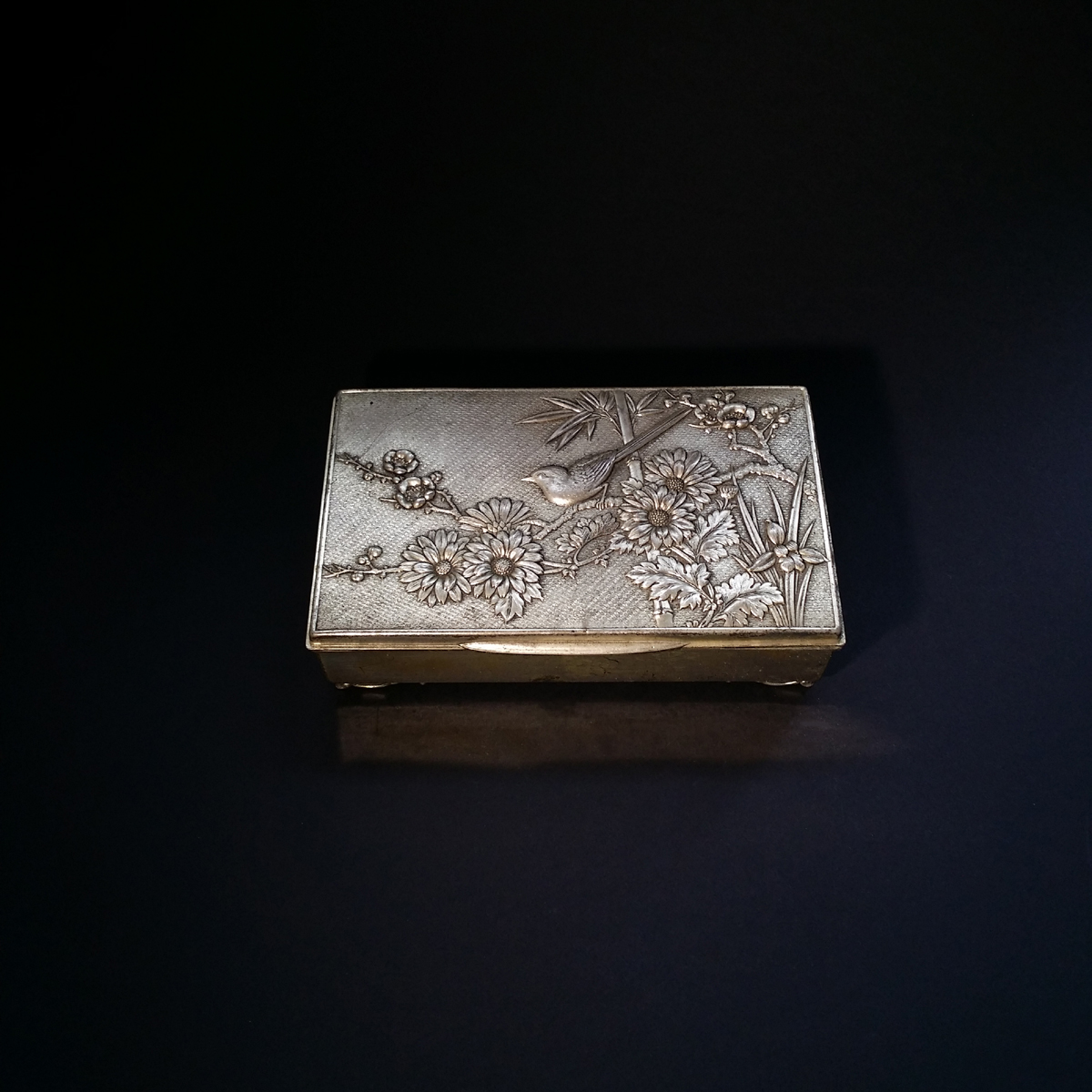
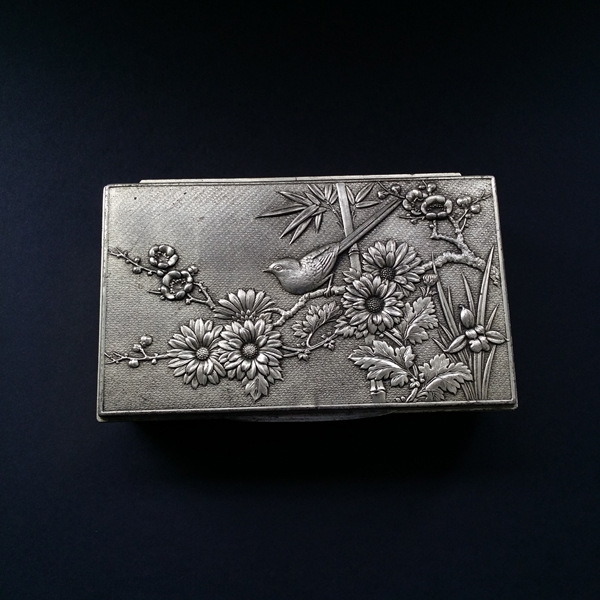
A Japanese mixed-metal silver trinket box, decorated with raised embossed decoration of a bird and chrysanthemum flowers.
Japanese mixed-metal and silver trinket boxes originated from a rich tradition of master sword-fitting smiths transitioning to decorative arts during the late 19th century
Condition: Good. No damage or repair.
Dimensions: 15cm x 8cm approx.
Provenance: Ex. Private collection, Hampshire, UK.
£90.00
Japanese mixed-metal techniques, collectively known as irogane, represent a pinnacle of metalworking technology that reached its aesthetic height during the Meiji period (1868–1912). This decorative tradition relies on unique copper alloys, most notably shakudō (a copper-gold alloy that patinates to a deep bluish-black) and shibuichi (a copper-silver alloy producing subtle shades of grey). When combined with pure silver and gold, these metals allowed artisans to "paint" intricate, multi-colored pictorial scenes onto functional objects. The creation of a silver trinket box adorned with these alloys required sophisticated chemical patination baths, typically using a boiling solution called rokushō, which oxidized each specific alloy to its intended, permanent hue.
Historically, the prominence of mixed-metal trinket boxes is directly tied to the political transitions of late 19th-century Japan. Following the Haitōrei decree of 1876, which banned samurai from carrying swords in public, highly skilled sword-fitting makers (kodogu-shi) suddenly lost their primary source of income. To survive, these master metalworkers redirected their centuries-old skills toward creating luxury domestic and export wares, such as vases, kogo (incense boxes), and trinket boxes. This shift effectively preserved traditional samurai metal-carving and inlay techniques—such as takazogan (high-relief inlay) and katakiri-bori (incised chiseling designed to mimic brushstrokes)—by adapting them to objects suited for international and modern Japanese markets.
The decorative themes featured on these silver and mixed-metal boxes frequently drew from classical Japanese literature, folklore, and the natural world. A single trinket box might feature a solid sterling silver chassis contrasted against a lid depicting delicate cherry blossoms, fierce dragons, or tranquil landscapes populated by birds and insects. These designs were heavily influenced by the Rinpa and Shijō schools of painting, emphasizing asymmetry, negative space, and a profound reverence for seasonal transitions. By rendering these painterly compositions in metal, artisans achieved an extraordinary depth and texture that made each box a self-contained narrative piece.
Today, Japanese mixed-metal trinket boxes are highly valued by museums and private collectors as monumental examples of cultural synthesis and technical mastery. They stand as a testament to an era when Japan successfully bridged the gap between traditional feudal craftsmanship and the demands of global modernity. Because the exact chemical compositions of the historic patination baths are difficult to replicate precisely, and because the labor-intensive techniques require decades to master, these objects remain finite historical artifacts that showcase the ultimate evolution of Japanese metallurgical art.
© Minerva Antiquities 2026 All rights reserved
Powered by w3.css